
No. 21 of Returning Home (Second Return)
Artaxerxes I is revealed in Ezra as a king who is both for and against the work in Jerusalem. His letter given to Ezra describes what his intentions are in sending the second group of Hebrews home.
This is a copy of the letter that King Artaxerxes gave to Ezra the priest, the scribe, a man learned in matters of the commandments of the Lord and his statutes for Israel: – Ezra 7:11ESV

Artaxerxes’ sends Ezra and his people back to Jerusalem to worship and offer to their God. This Persian king, like his predecessors, is intent on receiving blessings from the gods of his subjects. In his mind this strategy not only gains him the favor of the people’s god, but the goodwill and gratitude of his subjects, rendering them less likely to revolt. There are at least two faithful Hebrew subjects in Artaxerxes’ court, Ezra and Nehemiah. This letter to Ezra exemplifies his favor from the Persian king. It also mentions the approval of his seven counselors.
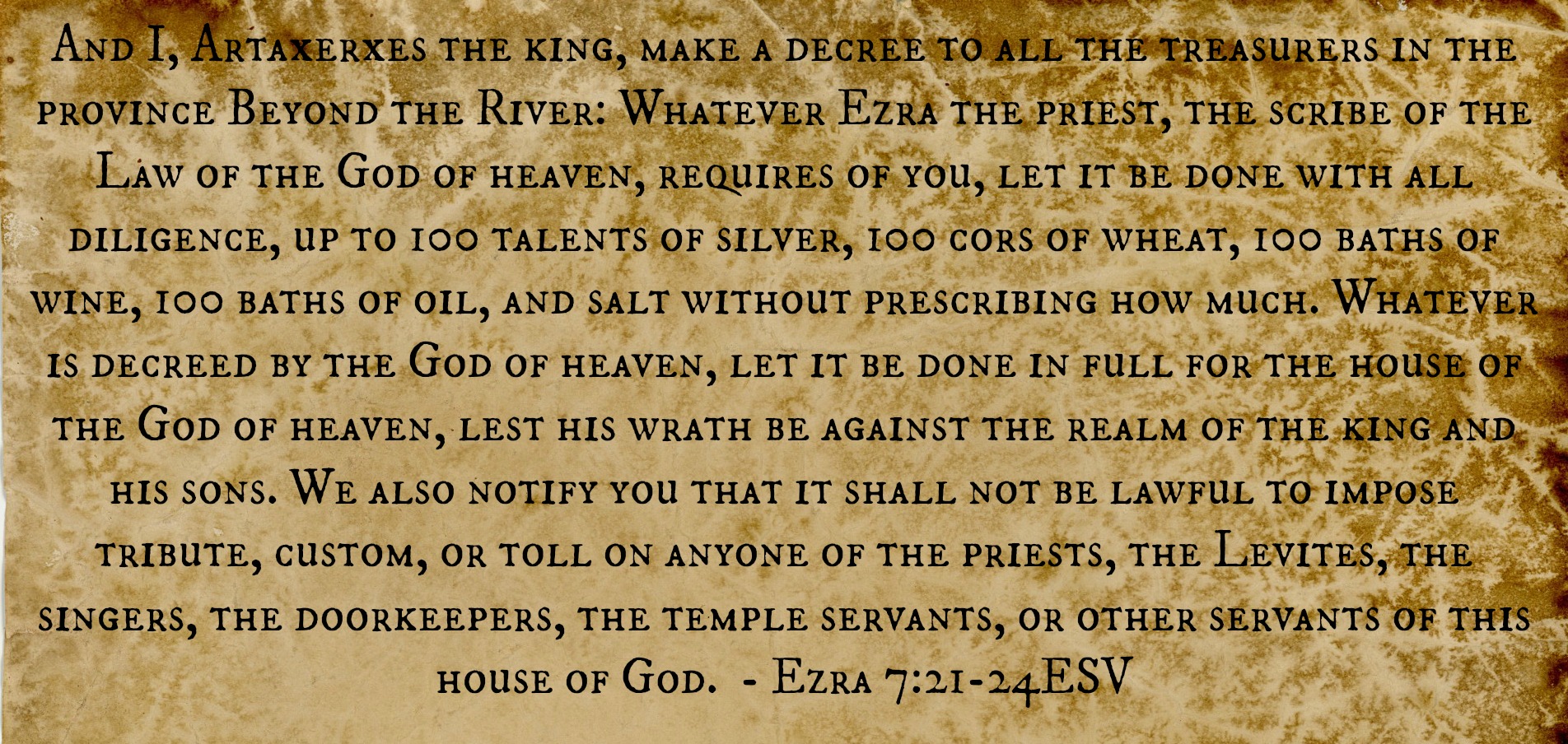
Just as Darius, this king of Persia commands the neighboring peoples to financially aid and support the work in Jerusalem. It is also note-worthy that the house of God and His workers was to be a tax-free institution.
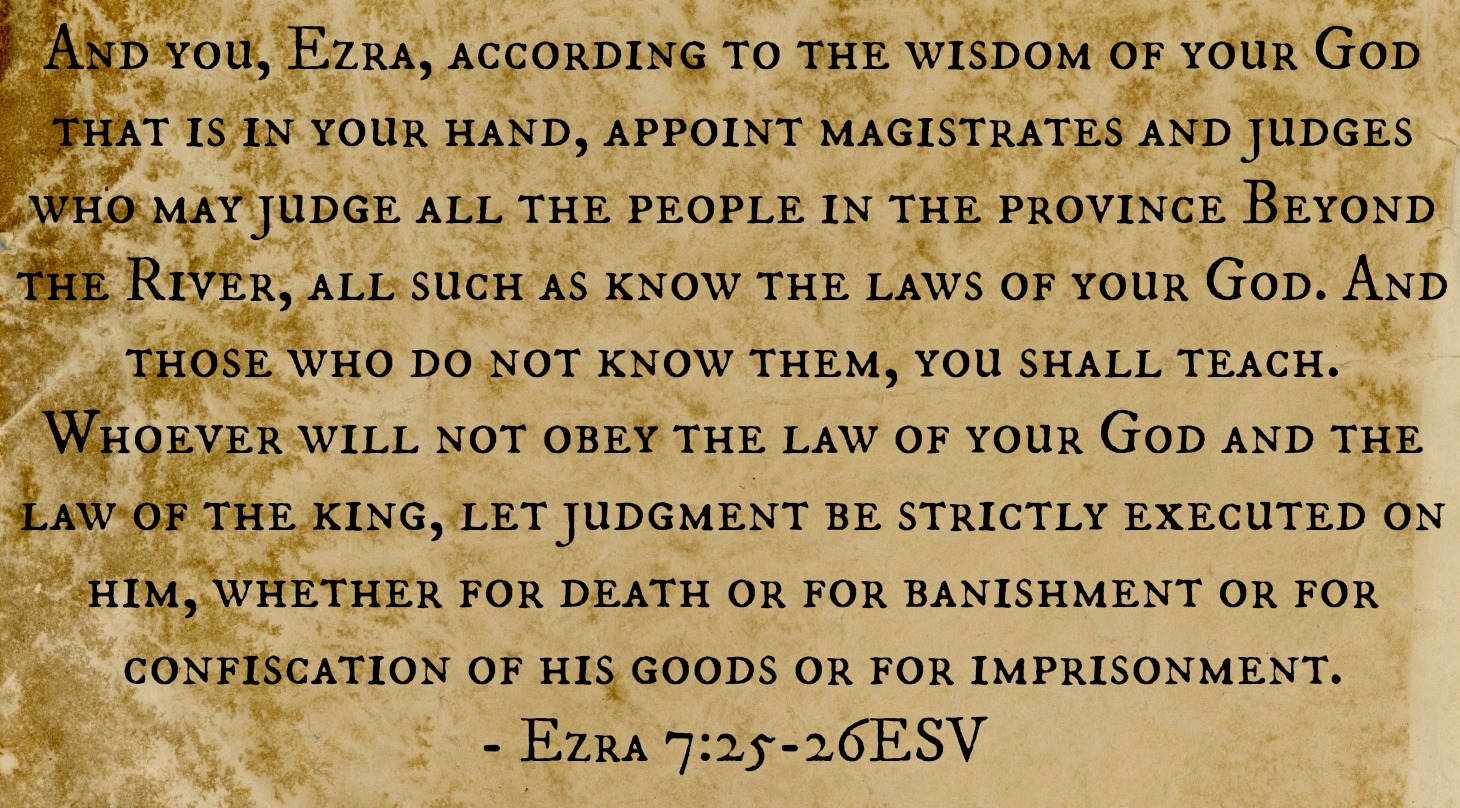
Lastly, Artaxerxes gives Ezra the authority to lead the work in Jerusalem. In so doing the king empowers Ezra to use the full arm of the law. He is to set up judges and governors, and to use capital punishment to enforce his position there.
Earlier in the book of Ezra, the scribe noted how Judah’s adversaries persuaded Artaxerxes I that Jerusalem would become a threat and the people of Judah would revolt if the king let them continue building the city wall (Ezra 4:8-16, found in Knowing the Truth). While it’s seen above that Artaxerxes I wants to please God for the benefits He provides, he will tolerate no threats of revolt in his empire. Was it not the will of God that Jerusalem be rebuilt? Did not Artaxerxes command Ezra in his letter that “whatever seems good to you and your brothers to do with the rest of the silver and gold, you may do, according to the will of your God”? This king, it seems, walked a fine line to keep his empire intact. Perhaps Ezra was the answer to the balance Artaxerxes I kept in the region beyond the river. The king had to trust his judgment to put so much treasure, authority, and might in this Hebrew scribe’s hands.
Consider the weight of Ezra’s work as he journeyed home: Ezra tells us he was versed in the law and born of the Levitical line. He proves himself to be a methodical record-keeper for Judah during the return to Jerusalem. Here, we see the magnitude of his empowered position as the Persian king’s representative. When faced with the same situation, some, like Moses, questioned their ability to lead. Some, like Jonah, ran from their work. Ezra approaches this giant task with these words,
Blessed be the Lord, the God of our fathers, who put such a thing as this into the heart of the king, to beautify the house of the Lord that is in Jerusalem, and who extended to me his steadfast love before the king and his counselors, and before all the king’s mighty officers. I took courage, for the hand of the Lord my God was on me, and I gathered leading men from Israel to go up with me. – Ezra 7:27-28
Ezra’s spirit was like Joshua and Caleb’s; he took courage in the face of overwhelming service because God was with him. His heart was thankful and willing — like Mary’s when she learned of the Son of God growing in her womb. And, like David, his mind was fixed on God’s will, having seen His plan work through the Persian king. Ezra was God’s servant — heart, mind, and soul.