
No. 30 of Returning Home (Renewed)
Shechaniah, seeing the weight of sin hanging over the nation of Israel because of their marriages to women of godless nations, proposes a solution to Ezra to bring them back into the right relationship with God.
Therefore let us make a covenant with our God to put away all these wives and their children, according to the counsel of my lord and of those who tremble at the commandment of our God, and let it be done according to the Law. – Ezra 10:3ESV
To return to a right relationship with God, these Israelite men must break the marriage covenants because they are not lawful under God’s covenant. Shecaniah does not dwell on regretting the sin. He sees that these men must change their lives; and in putting away these wives and children, they will forever affect their generations for the good.
Arise, for it is your task, and we are with you; be strong and do it.”– Ezra 10:4ESV
Shecaniah’s challenge to Ezra is a thousand times more poignant than Neil Armstrong’s “one small step for a man, one giant leap for mankind.” For, it is infinitely greater for a people to take that step back to God, one individual at a time. Shechaniah encourages Ezra to confront the priests, the Levites, and those Israelite men who are in these godless marriages. What a task for Ezra! Of all the responsibilities this servant of God has faced, this has to be the most difficult. God brought Ezra to this moment. He placed this weighty job squarely on Ezra’s shoulders. Through Shecaniah, God supports Ezra and exhorts him to be strong and confront the sinners in the family of God.
We see throughout Biblical history that these great challenges are often given to a follower of God who has proven him/herself to be faithful to Jehovah. God does not choose His leaders based on position or greatness; He chooses the willing-hearted man or woman who continually commits to allegiance with God. This is the one who will go against the wisdom or opinion of the whole. This is the one who will see as God sees and not as convention dictates.
Do we see sin in the midst of our spiritual families? How often to we confront it? How often is there support expressed by the leaders and the individual members to take the necessary actions to remove the sin? Shechaniah’s “be strong and do it” is a similar exhortation to Joshua’s words, “Be strong and of a good courage,” when he led the people into Canaan to conquer it. Going into battle against the enemy takes courage. It is all the more daunting and heartrending when one must go to battle for a spiritual sibling by confronting them in their sin. It takes having faith that God knows the outcome, and that He can see the way it will work out.
Then Ezra arose and made the leading priests and Levites and all Israel take an oath that they would do as had been said. So they took the oath. – Ezra 10:5ESV
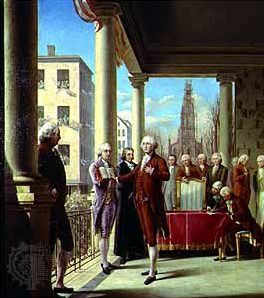
Ezra delivers God’s challenge to them–that they must recommit themselves to their covenant with Jehovah. It will not be easy, but the first step is to set the heart to walk in the right way by giving one’s word to God to make the necessary changes. It seems natural to us to make certain statements of allegiance: “I agree I will abide by this contract.” “I will tell the whole truth and nothing but the truth.” “I promise to love and to cherish…” Isn’t it wonderful to see the practice of stating a commitment originates from the Bible and God’s relationship with man?
There is a difference between the Christian’s commitment and Ezra’s enforcement of this oath. He made these sinners swear allegiance to God because they were under a government system based on God as their physical king. The people of Israel had to abide by detailed statutes in order to exist as a nation. To rebel in this matter meant to be cut-off in a material and cultural way. And because these men of Israel moved back to Jerusalem specifically to reestablish their temple worship and their nation, they must give their allegiance back to God, back to their nation, back to their identity as a people. While the Church is not a physical governmental system, we can know what God expects of His children, and how a willing heart will respond.
It is an honor to be invited to commit to the covenant of Christ, and its acceptance requires faithful allegiance. The promise to love God and obey the law of His Son brings us to a new identity as His people–not of a race or a nation, but of a worldwide kingdom. So, when a saved one turns away from his/her covenant with Christ, the saints cannot and should not “make” them return. We can only exemplify for them the serious cut-off situation they face now and in eternity. A child of God who turns away is not being a subject of Jesus the King. He/she does not sit at the Lord’s table and does not partake of the body of Christ. The brothers and sisters of one who breaks the New Covenant are to express that lonely situation to him/her by not participating in that familiar togetherness that was open to him/her before. A symbol of fellowship throughout history has been the sharing of a meal. Perhaps this is why Paul tells the Corinthians not to eat with one who is a brother who decides to live in sin (1 Corinthians 5:11). By displaying that disassociation, the deeper disassociation between God and the unrepentant soul is revealed; yet, it is up to the erring Christian to recommit to serving God. It is a personal decision. Each soul is personally accountable to God to uphold that promised commitment to the Most High.