No. 11 of Returning Home
“Worship should be done decently and in order!” quotes a Christian lady after a child runs into her legs, almost causing her to fall. And she’s right. God has a pattern of worship He wants us to follow so that we are able to commune with Him without unnecessary distractions. Children can be distractions. So can the chronic pains and aches of the elderly. So can that old A/C unit that competes with the lesson when it comes on. But some distractions can’t be helped. Let’s give this concept a little perspective by looking at the order the Israelites set up as recorded in Ezra.
“Now in the second year after their coming to the house of God at Jerusalem, in the second month, Zerubbabel the son of Shealtiel and Jeshua the son of Jozadak made a beginning, together with the rest of their kinsmen, the priests and the Levites and all who had come to Jerusalem from the captivity. They appointed the Levites, from twenty years old and upward, to supervise the work of the house of the Lord.” – Ezra 3:8ESV
Time has passed, and the Levites have set up their order. This Levitical system, prescribed in Moses’ day, not only assisted the Levite men to know their tasks and positions, but it helped the people serve God. The Levites were the wheel that made Israel’s government work. God was the hub, and He through Moses set up this governmental system with the Levites both as priests and judges. They were the religious leaders and the court governors. They had the law of Moses in possession and were responsible for the nation to uphold it.
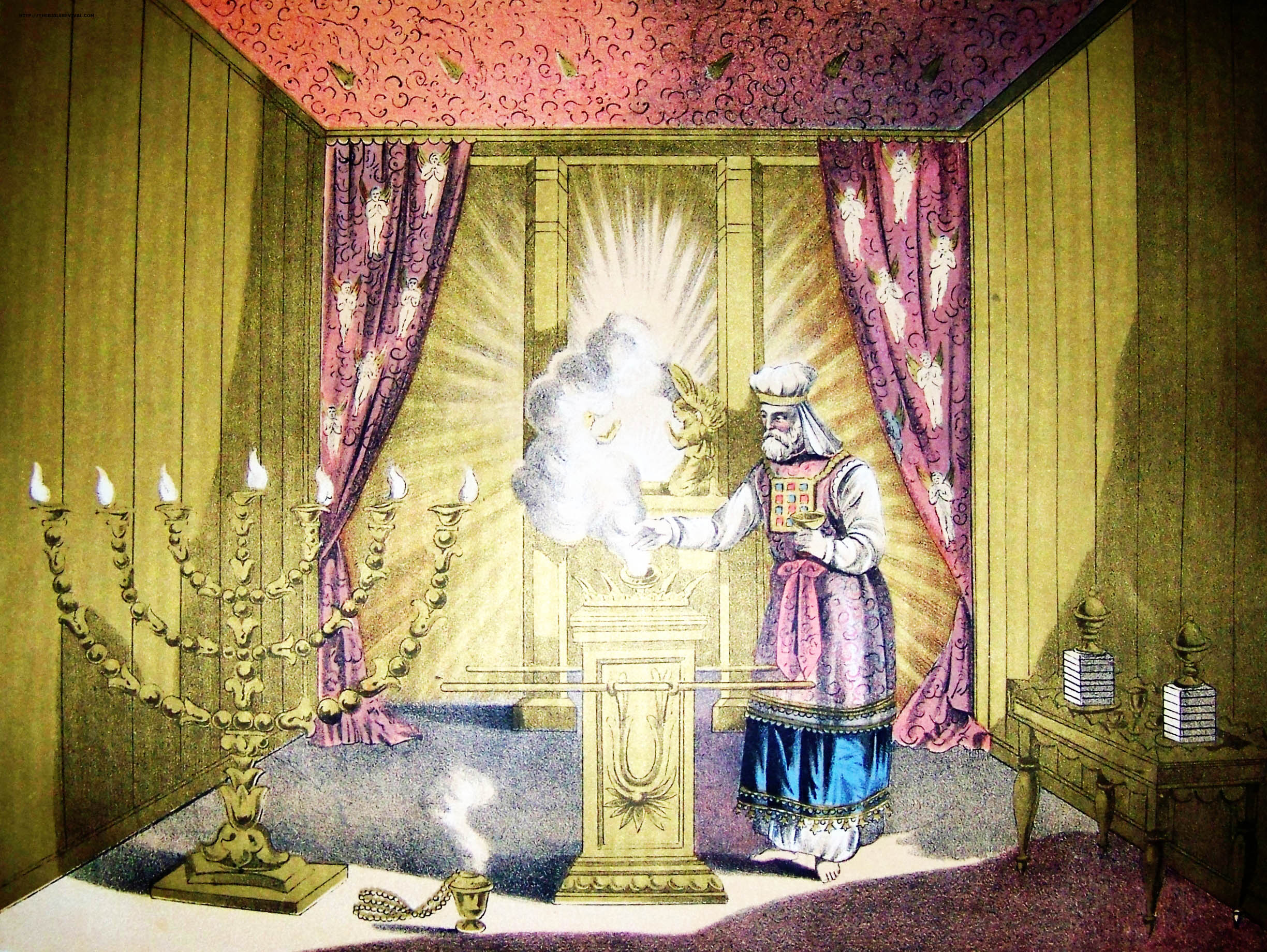
The Levite family had numerous roles — from those who could be a priest to those Levites who could serve the priesthood to God-approved wives for the holy work of the Levites. Levites in service to God had to dress in only God-instructed materials. In service their clothes had to remain undefiled; in service their bodies had to remain undefiled. They were instructed on the place near the altar where the animal was to be bled, the location where the animal’s body was to be cut, where to place their hands during the cutting, and where to sprinkle the blood. They had to know what portions of the animal to separate and put on the altar, which portions were to be burned up and which were to be food for the priests. Their order of worship was specific and detailed, and they were to perform their roles with reverence and accuracy daily and on a continual basis.
And Jeshua with his sons and his brothers, and Kadmiel and his sons, the sons of Judah, together supervised the workmen in the house of God, along with the sons of Henadad and the Levites, their sons and brothers. – Ezra 3:9ESV
These Levitical keepers of the law possessed the specifications for the temple, so they were needed to oversee every detail of this work. Two fathers are mentioned who are also present in Ezra’s census (2:40): Jeshua and Kadmiel. This passage places them in the family of Judah. This is not of the tribe of Judah, but a man of the Levites. His name is also given as Hodaviah in Ezra 2 and Hodevah in Nehemiah 7:43. The priesthood was given to the sons of Aaron while the sons of Levi who were not sons of Aaron were to serve in other temple work. Included in this passage are the sons of Henadad, who were of the Levites but not of Aaron’s lineage (Nehemiah 10:9).
The passage says “together they supervised the workmen.” The word “together” is the same Hebrew word found in Ezra 3:1, where it is translated “as one.” This word and its context shows the unity of the Levites. They were unified in doing their jobs to begin construction on the house of God.
And when the builders laid the foundation of the temple of the Lord, the priests in their vestments came forward with trumpets, and the Levites, the sons of Asaph, with cymbals, to praise the Lord, according to the directions of David king of Israel. – Ezra 3:10ESV
This was a celebration! The foundation was laid, and the temple construction had begun. The priests donned their ceremonial clothing, and Asaph’s sons, also Levites, were the singers and music-makers. David’s directions for Asaph and the singers can be found in I Chronicles 16:4-5 and in I Chronicles 16:41-42. Nehemiah 12 repeats the command given by David and the Levites who participated in the musical praise and thanksgiving to God when the wall of Jerusalem was later built.
“And at the dedication of the wall of Jerusalem they sought the Levites in all their places, to bring them to Jerusalem to celebrate the dedication with gladness, with thanksgivings and with singing, with cymbals, harps, and lyres.” – Nehemiah 12:27ESV
“Then I brought the leaders of Judah up onto the wall and appointed two great choirs that gave thanks. One went to the south on the wall to the Dung Gate. 32 And after them went Hoshaiah and half of the leaders of Judah, 33 and Azariah, Ezra, Meshullam, 34 Judah, Benjamin, Shemaiah, and Jeremiah, 35 and certain of the priests’ sons with trumpets: Zechariah the son of Jonathan, son of Shemaiah, son of Mattaniah, son of Micaiah, son of Zaccur, son of Asaph; 36 and his relatives, Shemaiah, Azarel, Milalai, Gilalai, Maai, Nethanel, Judah, and Hanani, with the musical instruments of David the man of God.” – Nehemiah 12:31-36
The singers were instructed to accompany their voices with musical instruments (such as the cymbal, harp, and lyre). David, God’s prophet, prescribed the instruments the Levites were to use in praise and in worship to God. This was God-authorized worship. When David is preparing Solomon to build the temple, he tells his son, “the LORD made me understand in writing by his hand upon me, all the works of this pattern” (1 Chronicles 28:19KJV). God patterned this temple with all the material things that would appeal to the senses. The brilliantly colored robes, the golden furnishings of the temple, the instruments of praise were all established to express in a physical way the praises and worship of God.